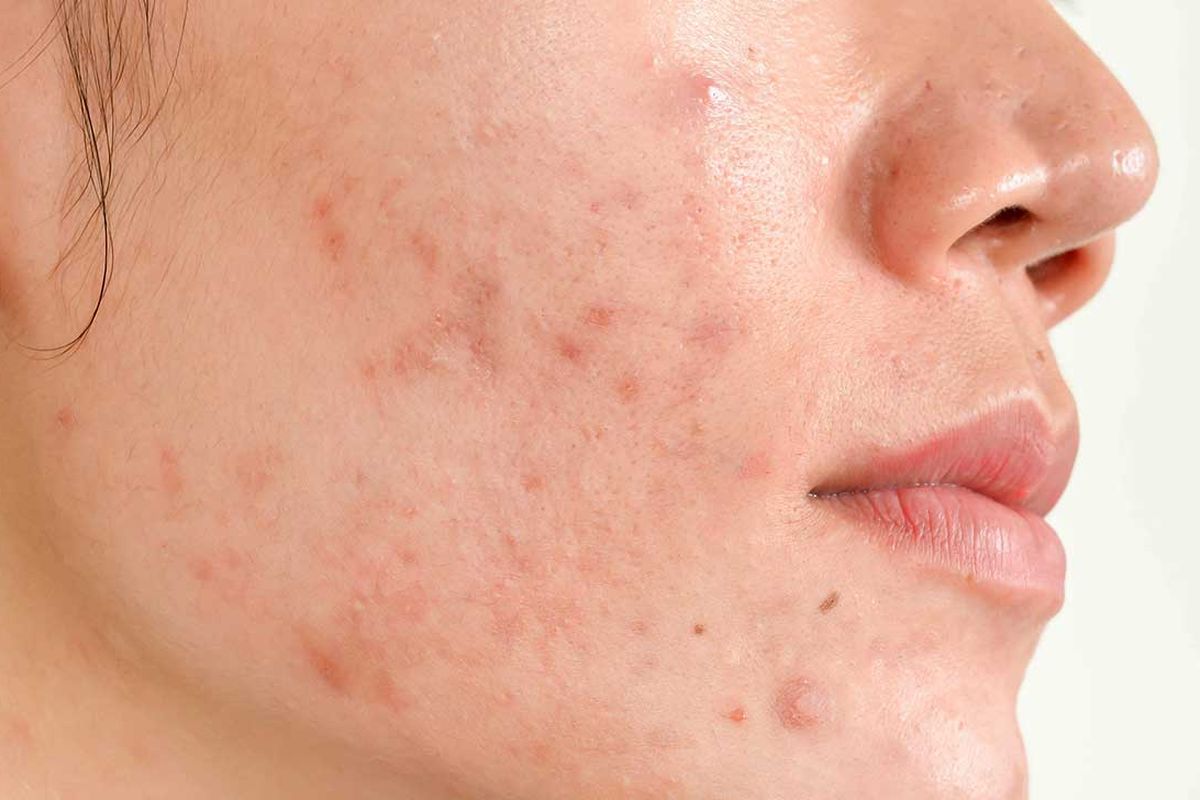
If you’re weighing whether to book an injectable PDRN treatment at a clinic or start with an affordable topical serum at home, the answer depends on your timeline and budget: professional PDRN injections deliver faster, more visible improvements in skin texture and tone, while topical formulations offer a gentler, budget-friendly entry point that fits seamlessly into your existing skincare routine. Both approaches harness polydeoxyribonucleotide, a regenerative ingredient derived from salmon DNA (or plant-based alternatives in vegan formulations) that has shown promise in supporting skin cell renewal and may help improve elasticity and tone over time.
PDRN has rapidly moved from the professional treatment room into everyday skincare. Once reserved exclusively for high-end clinical procedures, this ingredient is now available in serums priced as low as $18, making it accessible to anyone curious about its potential benefits. Professional aestheticians like Vee Mistry have integrated PDRN facials into their studios, citing research suggesting it’s 95 percent compatible with human DNA and may help reduce inflammation while promoting a smoother, more even complexion. Topical brands like INKEY highlight that their plant-derived PDRN formulations are designed to support collagen and hyaluronic acid levels, though results from at-home products typically unfold more gradually than injectable treatments.
Understanding the practical differences between these two paths is essential. This comparison walks you through what each option entails, how they differ in delivery method and expected outcomes, and which approach aligns best with your skincare goals, comfort level, and investment capacity in 2026.
PDRN Skincare at a Glance: Quick Comparison
Clinical PDRN treatments and topical PDRN products represent two distinct approaches to incorporating this emerging ingredient into your skincare routine. Understanding the key differences upfront helps you make an informed decision that aligns with your goals, lifestyle, and budget.
| Factor | Clinical PDRN Treatments | Topical PDRN Products |
|---|---|---|
| Delivery Method | Professional injections or in-office facial procedures | Serums and creams applied at home |
| Setting | Performed by trained practitioners at clinics or studios | Self-applied as part of daily skincare routine |
| Results Timeline | Visible changes may appear within weeks | Consistent daily use over several weeks typically needed |
| Investment Level | Higher cost per session, requires professional consultation | Affordable products starting around $18 |
| Best For | Those seeking professional oversight and targeted interventions | Those wanting to integrate PDRN into existing home routines |
Clinical treatments involve professional procedures where PDRN is delivered through injections or specialized facials performed by trained practitioners like Vee Mistry, who launched a PDRN facial at her SkinByVee studio. These sessions provide personalized assessment and direct delivery of PDRN to the skin.
Topical products bring PDRN formulations into the at-home skincare market. Once reserved for high-end clinical settings, PDRN now appears in daily-use serums and creams, including plant-based vegan options. These products allow you to incorporate the ingredient into your existing routine without clinic visits.
Both approaches use polydeoxyribonucleotide, which consists of small, low molecular fragments. The reported 95 percent compatibility with human DNA makes PDRN an interesting option for various skin goals. However, the delivery method significantly affects how the ingredient interacts with your skin and what you can reasonably expect from each approach.
What Each Option Is
Clinical PDRN Treatments: Professional Injectable Skin Boosters
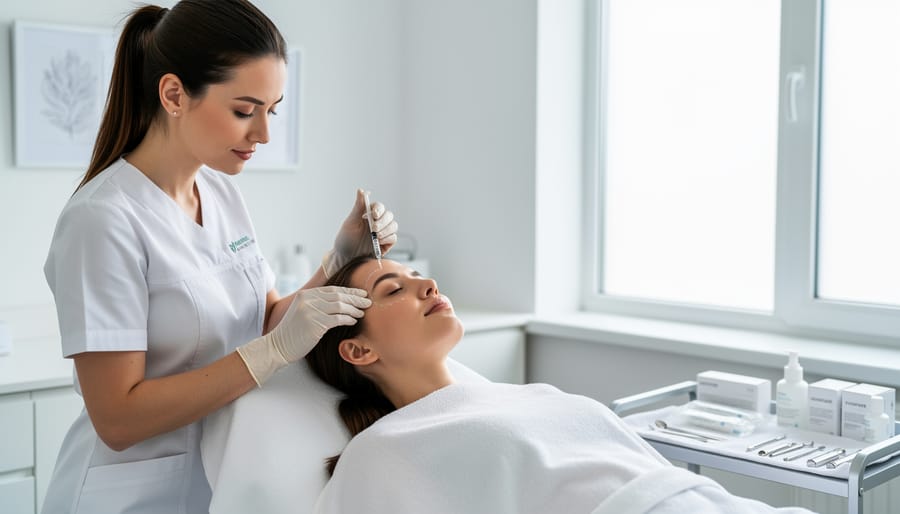
Clinical PDRN treatments are professional procedures administered by trained practitioners in clinical settings. Unlike at-home skincare products, these treatments deliver PDRN through injections or specialized facials performed by qualified professionals who understand skin anatomy and proper technique. The professional setting allows for precise delivery and personalized treatment protocols tailored to individual skin concerns.
PDRN consists of salmon DNA fragments broken down into low molecular weight particles. These fragments are reported to have 95 percent compatibility with human DNA, which is one reason practitioners are adopting the ingredient for aesthetic treatments. The professional skincare community continues to expand its PDRN offerings, with practitioners like Vee Mistry launching dedicated PDRN facials at studios such as SkinByVee.
During a clinical PDRN treatment, the practitioner typically uses fine needles to deliver the solution into targeted areas of the face or body. Some practitioners incorporate PDRN into more comprehensive facial protocols that may combine injection techniques with other modalities. The treatment session itself usually takes 30 to 60 minutes, depending on the areas being addressed and the specific protocol used.
These treatments are designed to support skin cell renewal processes. Practitioners report that PDRN may help with skin texture, tone, and elasticity while potentially supporting the skin’s inflammatory response. The clinical approach allows for higher concentrations of PDRN delivered directly into the skin layers where the ingredient can interact with skin cells.
Treatment plans typically involve a series of sessions spaced several weeks apart, followed by maintenance appointments.
Topical PDRN Products: Daily Skincare Formulations
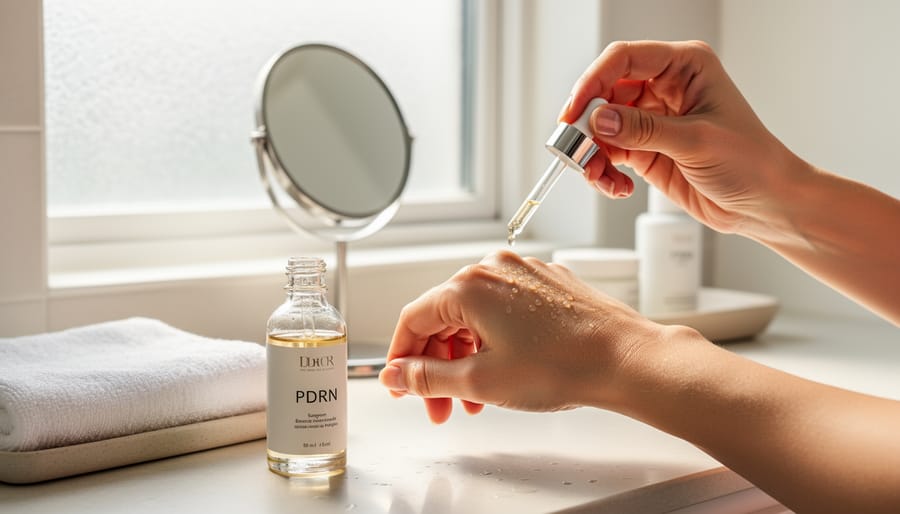
Topical PDRN products bring an ingredient once reserved for high-end clinical treatments into your daily skincare routine. These serums and creams contain polydeoxyribonucleotide in formulations designed for home use, making this emerging ingredient accessible without professional appointments or in-office procedures.
The products typically come as lightweight serums or daily-use creams that you apply as part of your morning or evening regimen. You’ll find them formulated at concentrations suitable for regular application, with textures that layer well under moisturizers and sunscreen. Most topical PDRN products are designed to be used once or twice daily, similar to other active serums in your routine.
Formulation options vary across brands. Traditional PDRN products use salmon-derived DNA fragments, while newer options offer plant-based alternatives for those seeking vegan skincare. INKEY’s PDRN Serum, for example, uses a vegan, plant-derived formulation and retails for $18, demonstrating how accessible this ingredient has become in 2026.
Topical PDRN is associated with supporting skin cell renewal processes and may help with collagen and hyaluronic acid levels in the skin, though results differ from clinical injections due to the different delivery method. These products focus primarily on hydration, texture improvement, and supporting the skin’s natural renewal cycle through consistent daily use.
The affordability and convenience of topical PDRN products make them an approachable entry point for anyone curious about this ingredient. You can incorporate them into your existing routine without the commitment of professional treatments, though the delivery method means they work differently than injectable options.
How PDRN Works in Skincare
PDRN works as a skincare ingredient through its structure: polydeoxyribonucleotide consists of small, low molecular weight fragments of DNA, typically derived from salmon. These fragments are reported to be 95 percent compatible with human DNA, which helps explain why the ingredient is being explored in both professional treatments and at-home formulations. The low molecular weight allows these fragments to interact with skin cells in ways that larger molecules cannot.
In clinical settings, PDRN is injected directly into the skin, delivering these DNA fragments to deeper layers where they may support cellular processes. Practitioners report that PDRN treatments are associated with improved skin texture, tone, and elasticity, and may help lower inflammation. The injection method allows for direct delivery to the dermis, where skin renewal processes occur.
When formulated for topical use, PDRN works differently. Daily application of serums and creams allows these fragments to interact with the skin’s surface layers over time. Topical formulations are designed to promote skin cell renewal and may help boost collagen and hyaluronic acid levels in the skin when used consistently. While the delivery method differs, the core mechanism remains the same: providing DNA fragments that can support the skin’s natural processes.
Both delivery methods aim to work with your skin’s existing renewal systems rather than forcing dramatic changes. Clinical PDRN treatments typically show visible results within weeks due to direct delivery, while topical products require several weeks of daily use to demonstrate their potential benefits. The choice between injectable and topical PDRN often comes down to how deeply you want the ingredient delivered and how quickly you’re hoping to see changes.
PDRN is now available in both salmon-derived and plant-based vegan formulations for topical products, making the ingredient accessible to more people. Regardless of the source or delivery method, PDRN functions as a support ingredient that may help enhance your skin’s natural renewal capacity rather than replacing conventional skincare steps.
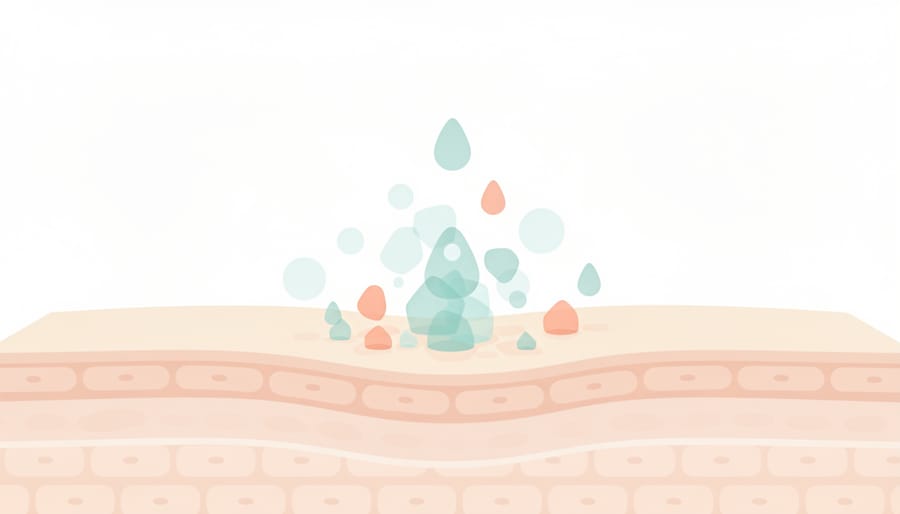
Clinical PDRN Treatments vs. Topical PDRN Products: Dimension-by-Dimension Comparison
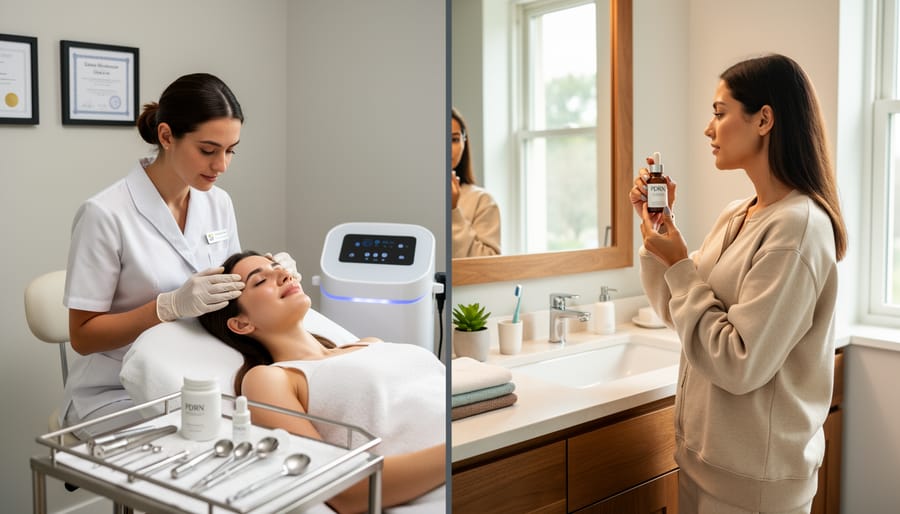
Delivery Method and Treatment Experience
Clinical PDRN treatments involve scheduled appointments with trained practitioners who perform the procedure in a professional setting. Sessions typically last 30 to 60 minutes, depending on the treatment area and specific protocol. The practitioner uses fine needles to deliver PDRN formulations directly into targeted skin layers, though newer facial protocols may combine injection with other delivery methods. Most treatment plans involve a series of sessions spaced two to four weeks apart, with maintenance visits every few months. Some discomfort during injection is common, though practitioners often apply numbing cream beforehand to improve comfort.
Topical PDRN products require no appointments or professional supervision. You apply serums or creams at home as part of your daily skincare routine, typically once or twice daily after cleansing. Application takes just seconds, a few drops smoothed over clean skin. There’s no discomfort beyond what you might experience with any new skincare product. The commitment is consistency rather than scheduled sessions: topical formulations work gradually with regular use over weeks and months, fitting easily into existing routines without the time investment of clinical visits.
Skin Concerns and Results
Clinical PDRN treatments and topical PDRN products target overlapping but distinct skin concerns, shaped largely by how deeply each delivery method reaches.
In our evaluation of professional treatments, we found that the injectable form is often associated with improvement in texture, tone, and elasticity, qualities practitioners report seeing after a series of sessions. Because the molecules are delivered beneath the skin’s surface, clinical PDRN may help lower inflammation and support processes tied to skin renewal at a deeper level. Clients seeking visible change in mature skin, uneven tone, or loss of firmness tend to see this approach as a more intensive option.
Topical PDRN products, by contrast, work primarily on the skin’s surface and upper layers. During our testing of serums and creams, we observed that these formulations focus on hydration, smoothing texture, and supporting the skin’s natural renewal cycle over time. They can help with dullness and fine surface irregularities, but the results are typically more gradual and less pronounced than what professional injections may offer.
Both forms draw on the same core ingredient, polydeoxyribonucleotide fragments, but the depth of delivery and concentration determine which concerns each can realistically address. Choosing between them depends on the degree of change you’re after and your tolerance for commitment, both in time and investment.
Timeline and Commitment
Clinical PDRN treatments typically work on a compressed timeline. Many clients notice visible changes in skin texture and tone within two to four weeks after their initial session, though practitioners often recommend a series of treatments spaced several weeks apart for optimal results. The commitment here is concentrated: a handful of professional appointments over a few months, followed by potential maintenance sessions.
Topical PDRN products require a different mindset entirely. These formulations need consistent daily application over an extended period, think eight to twelve weeks of twice-daily use, before visible benefits emerge. Some studies suggest that daily topical application over several weeks may help support improvements in hydration and texture, but patience is non-negotiable. Unlike the controlled clinical environment where PDRN is delivered directly through injections, at-home serums work gradually through the skin barrier.
The trade-off is straightforward: clinical treatments offer faster visible results with less frequent time investment, while topical products demand daily discipline but integrate seamlessly into existing routines. At Body Sculpting Laser Clinic, we help clients understand these different timelines so they can set realistic expectations aligned with their lifestyle and goals.
Investment and Accessibility
Clinical PDRN treatments represent a significant financial commitment, with professional procedures typically ranging from several hundred to over a thousand dollars per session depending on the treatment area and practitioner expertise. Most protocols require multiple sessions spaced weeks apart to achieve desired results, and maintenance treatments may be recommended. However, this investment includes personalized consultation with trained professionals who assess your skin, develop a customized treatment plan, and provide ongoing oversight throughout your journey. At Body Sculpting Laser Clinic, this professional guidance ensures treatments are tailored to your specific concerns and administered safely by qualified practitioners.
Topical PDRN products have dramatically shifted the accessibility landscape. What was once reserved for clinical settings is now available at price points that fit most budgets, INKEY’s PDRN Serum retails for just $18, making daily use financially feasible for consistent application over time. You can purchase these formulations without appointments or downtime, integrating them into your existing routine at home. The trade-off is the absence of professional assessment and personalized oversight that clinical treatments provide.
Your choice depends on your budget, the level of professional guidance you value, and whether you prefer the comprehensive approach of in-office treatments or the convenience of daily at-home care.
Who Should Choose Which: Matching PDRN Options to Your Goals
Selecting the right PDRN approach starts with clarifying what you want from your skincare routine and how much involvement you’re willing to commit. Clinical treatments and topical products serve different purposes in skin rejuvenation, and your choice depends on factors like your specific concerns, timeline expectations, budget, and whether you prefer professional oversight or independent at-home care.
If you’re addressing visible signs of aging, uneven texture, loss of elasticity, or dullness, and want structured, professionally guided results, clinical PDRN treatments may be the better fit. These in-office procedures deliver concentrated PDRN through injection or specialized facials, offering the kind of intensive approach that comes with personalized assessment and professional monitoring. Clients who appreciate having a practitioner evaluate their skin and adjust treatment plans over time often find this path more reassuring. The financial commitment is higher, but it includes that expert guidance and the accountability of scheduled appointments.
Topical PDRN products suit those who prefer integrating new ingredients into their existing skincare routine without clinic visits or needles. If you’re comfortable researching products, testing formulations, and maintaining consistent daily application, serums and creams offer an accessible entry point. They work well for clients focused on hydration, texture refinement, and supporting the skin’s natural renewal processes over time. The $18 price point of options like INKEY’s vegan PDRN Serum makes this approach feasible for those exploring the ingredient without a major financial leap. You control the frequency, layering, and combination with other products, which appeals to people who enjoy customizing their routines.
- Looking for intensive rejuvenation with professional guidance
- Choose clinical PDRN treatments if you want concentrated delivery, personalized assessment, and professional monitoring throughout your skin rejuvenation journey.
- Maintaining results between professional treatments
- Use topical PDRN products as a complement to clinical sessions, extending benefits through daily at-home application while scheduling periodic in-office treatments.
- Exploring PDRN benefits on a budget
- Start with affordable topical serums to test how your skin responds to PDRN before committing to higher-cost professional procedures.
- Combining approaches for comprehensive care
- Layer clinical treatments for targeted concerns with daily topical products for ongoing support, creating a complete PDRN-focused skincare strategy.
Many clients benefit from combining both approaches rather than choosing one exclusively. We often see people who schedule clinical PDRN facials every few months while using topical products daily to maintain progress. This layered strategy offers the intensive benefits of professional treatment alongside the consistent support of at-home application. It’s also a practical way to stretch your investment: professional sessions tackle specific concerns while daily serums keep your skin supported between appointments.
Your lifestyle matters, too. Clients with demanding schedules who struggle to maintain elaborate routines may find clinical treatments simpler, they show up, receive the treatment, and leave without daily product commitments. Conversely, those who already have established skincare rituals often prefer adding a topical PDRN serum to their lineup. Consider whether you’re more likely to stick with frequent clinic visits or daily morning applications when evaluating which path fits your reality.
At Body Sculpting Laser Clinic, we help clients match PDRN options to their individual circumstances through consultation. Our approach considers not just what you want to improve, but how you want to engage with your skincare and what fits your budget and schedule. Whether that means starting with topical products and graduating to clinical treatments, or launching with professional sessions supported by at-home care, we design a plan that works for you.
What to Consider Before Starting PDRN Skincare
Before exploring PDRN skincare, taking a few preparatory steps can help you make informed decisions and set realistic expectations for your skin rejuvenation journey.
If you’re considering clinical PDRN treatments like injectable skin boosters or professional PDRN facials, consultation with a qualified practitioner is essential. At Body Sculpting Laser Clinic, we begin every treatment relationship with a thorough assessment of your skin concerns, medical history, and aesthetic goals. This personalized approach allows us to determine whether PDRN treatments align with your needs and how they might work alongside other procedures you may be receiving, such as dermal fillers or laser therapies. Professional oversight ensures that treatment protocols are tailored to your skin type and that any potential contraindications are identified before you begin.
For topical PDRN products like serums and creams, patch testing is a sensible precaution. Apply a small amount to your inner forearm or behind your ear and observe for 24 to 48 hours to check for irritation or sensitivity. This simple step can prevent adverse reactions when you introduce the product to your face.
- Professional consultation for clinical treatments to assess candidacy and develop a personalized plan
- Skin sensitivity assessment through patch testing for topical formulations
- Ingredient compatibility review if you use active skincare ingredients like retinoids or acids
- Integration planning with existing treatments to avoid overlap or interaction concerns
- Realistic timeline expectations, understanding that clinical results may appear within weeks while topical products require consistent daily use
Understanding what PDRN can and cannot do helps manage expectations. While PDRN may support skin cell renewal processes and help improve texture, tone, and hydration over time, it is not a miracle solution. Results depend on factors including your age, skin condition, lifestyle, and adherence to treatment protocols.
PDRN works best as part of a comprehensive skincare strategy that includes sun protection, appropriate cleansing, and hydration. At Body Sculpting Laser Clinic, we view PDRN as one tool within a broader approach to skin health, and we’re committed to guiding you through safe, evidence-informed choices that align with your individual goals.
Frequently Asked Questions About PDRN Skincare
Is PDRN safe for all skin types? Can you combine it with other treatments? What about vegan options? We’ve gathered the most common questions we hear about PDRN skincare to help you make informed decisions.
Is PDRN safe for all skin types?
PDRN, whether in clinical treatments or topical products, is reported to have 95 percent compatibility with human DNA, which suggests it may work across various skin types. However, we recommend patch testing any new topical product and consulting with a qualified professional before starting clinical treatments to ensure it’s appropriate for your individual skin.
Are there vegan PDRN options?
Yes. While traditional PDRN is derived from salmon DNA, plant-based alternatives are now available, INKEY’s PDRN Serum, for instance, uses a vegan, plant-derived formulation that offers a cruelty-free option for those who prefer it.
Can I use topical PDRN products alongside professional treatments?
Many clients successfully combine at-home topical PDRN with clinical treatments like baby Botox or professional facials. We recommend discussing your full skincare routine with your practitioner to create a coordinated plan that supports your goals without overstimulating your skin.
How does PDRN compare to other skin-boosting ingredients?
PDRN is associated with supporting skin cell renewal and may help with collagen and hyaluronic acid levels in the skin, which makes it complementary to rather than competitive with ingredients like retinol or vitamin C. The key difference is PDRN’s low molecular structure, which allows it to work on skin processes in a distinct way.
We’ve also found that clients interested in PDRN often ask how it fits with targeted concerns like addressing eye bags solutions. While clinical PDRN treatments may help with texture and tone in delicate areas, topical products offer a gentler daily approach. The salmon DNA versus plant-derived question comes up frequently too: both forms share the same low molecular fragment structure, though sourcing differs, salmon-derived PDRN has a longer clinical track record, while plant-based options address ethical preferences without compromising on the core ingredient profile.
What you can expect depends on which form you choose. Clinical PDRN treatments performed by trained professionals involve injections or specialized facials that may show visible improvements within weeks. Topical PDRN products require consistent daily application over several weeks, and while they won’t replicate clinical depth, they can support your skin’s natural renewal processes as part of your ongoing routine. Both approaches benefit from realistic expectations and patience, PDRN works gradually rather than delivering instant transformation.
Pros and Cons
- Both clinical and topical PDRN options are available to suit different budgets and preferences.
- PDRN is reported to be 95 percent compatible with human DNA, which may support skin processes.
- Topical formulations now make this once clinical-only ingredient accessible for daily home use.
- Vegan, plant-based PDRN options are available for those who prefer non-animal-derived skincare.
- Professional PDRN treatments offer personalized protocols under qualified practitioner oversight.
- Clinical PDRN treatments require professional administration and typically involve higher costs.
- Topical PDRN products deliver the ingredient differently than injectables, which may affect outcomes.
- Results from both approaches require realistic expectations and consistent commitment over time.
- Not all PDRN formulations are created equal, making product selection and research important.
- Clinical treatments may not suit those who prefer non-invasive routines or gentler methods like physical exfoliation.
Understanding these trade-offs helps you make an informed decision about which PDRN approach aligns with your skincare goals. Neither option is inherently better, your choice depends on what matters most to you, whether that’s professional guidance and potentially faster visible changes with clinical treatments, or the convenience and affordability of incorporating topical PDRN into your daily routine. At Body Sculpting Laser Clinic, we help clients weigh these considerations during personalized consultations to determine the best fit for their individual needs.
Both clinical PDRN treatments and topical PDRN products bring distinct advantages to your skincare routine, and neither is universally “better”, the right choice depends on what you’re trying to achieve, how much you want to invest, and whether you prefer professional oversight or daily at-home care. Clinical injections and facials deliver PDRN directly into the skin, often associated with visible improvements in texture, tone, and elasticity within weeks, but they require professional administration and a higher upfront cost. Topical serums and creams offer a more accessible entry point, with formulations now available starting at just $18, and may support skin renewal and hydration with consistent daily use over time.
For many clients, the most effective approach isn’t choosing one over the other but combining both: professional PDRN treatments to address specific concerns with targeted results, supported by topical products that help maintain those improvements between sessions. At Body Sculpting Laser Clinic, we’re committed to helping you navigate these emerging options with personalized guidance tailored to your unique skin goals, budget, and lifestyle. Whether you’re curious about in-office PDRN facials, looking for recommendations on topical formulations, or exploring a hybrid strategy, our team can create a plan that fits your needs.
Skincare innovation continues to evolve, and 2026 brings more ways than ever to support your skin’s natural processes. Taking the time to understand your options and seeking expert advice means you’re making informed, intentional choices, steps that truly matter when investing in your skin’s long-term health and appearance.