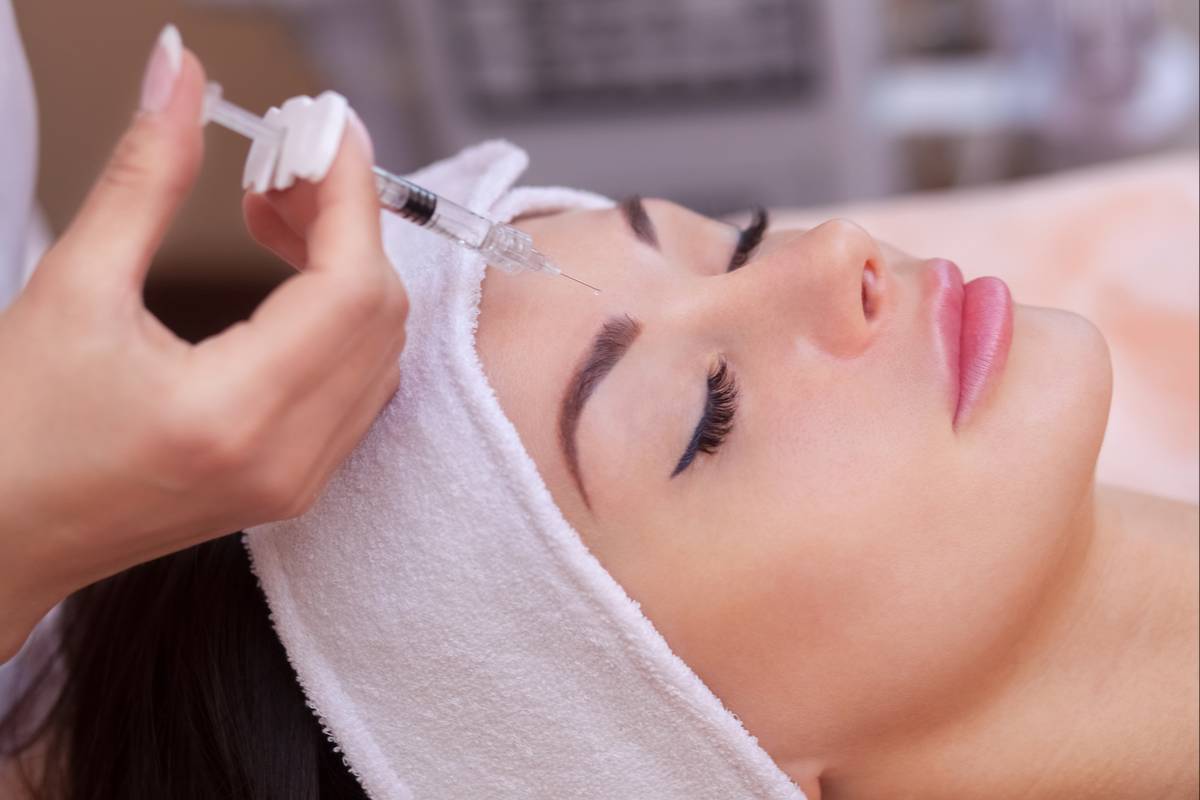
Research peptides sold online through unregulated vendors pose significant safety risks, while medically supervised peptide therapy administered by licensed professionals offers proven benefits for aesthetic enhancement and wellness. The difference isn’t merely about legality or convenience. It’s about your health and getting treatments that actually work from a reputable peptide vendor operating under proper medical oversight.
If you’re searching for research peptides online, you’re likely drawn to their promise of anti-aging effects, improved skin texture, muscle recovery, or weight management. These aren’t empty claims. Peptides are short chains of amino acids that act as cellular messengers, triggering specific biological responses in your body. When properly formulated and administered by qualified practitioners, they can deliver remarkable results. The challenge lies in distinguishing between legitimate therapeutic peptides from vendors operating within medical guidelines and unregulated “research” compounds sold with no quality assurance, dosing guidance, or medical oversight.
Here’s what most people don’t realize: the term “research peptides” often serves as legal cover for vendors selling substances not approved for human consumption. These products may contain incorrect concentrations, impurities, or degraded compounds that render them ineffective or potentially harmful. Without proper screening, health assessment, or professional guidance, you’re essentially experimenting on yourself.
In 2026, peptide therapy has evolved into a sophisticated branch of aesthetic medicine. Medical spas and clinics now offer personalized peptide protocols tailored to your unique biology, health history, and aesthetic goals. These treatments use pharmaceutical-grade compounds, precise dosing, and ongoing monitoring to ensure both safety and effectiveness.
This guide will help you understand what peptides are, why unregulated research peptides carry serious risks, and how to access legitimate peptide therapy that delivers real results under professional care.
Understanding Research Peptides: What They Are and How They Work
Peptides are short chains of amino acids, typically between two and fifty, that serve as the building blocks of proteins in your body. Think of them as molecular messengers: they signal cells to perform specific functions, from producing collagen in your skin to regulating metabolism and tissue repair. Your body naturally produces thousands of different peptides, each with distinct roles in maintaining health and appearance.
When peptides are broken down from larger proteins or synthesized in laboratories, they can be designed to target particular biological processes. This specificity has made them attractive in medical research and, increasingly, in aesthetic medicine. A peptide that stimulates collagen production, for example, might help reduce fine lines when properly administered under medical supervision.
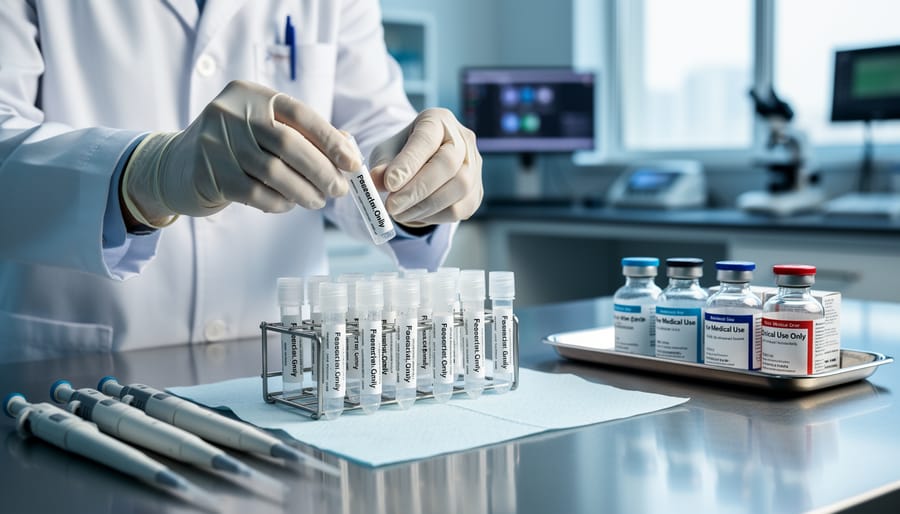
Here’s where terminology becomes critical for your safety. “Research peptides” refers to compounds sold explicitly for laboratory investigation, not for human consumption or therapeutic use. These products typically carry labels stating “for research purposes only” or “not for human use.” They’re intended for scientists studying peptide mechanisms in controlled laboratory settings, often in cell cultures or animal models.
Research-grade peptides sold online generally lack the rigorous quality controls required for medical treatments. They may contain impurities, incorrect concentrations, or bacterial contamination because they’re not manufactured under pharmaceutical standards. There’s no verification of purity, no sterility testing, and no guarantee that what’s on the label matches what’s in the vial.
Therapeutic-grade or medical-grade peptides, by contrast, are produced in facilities that follow strict pharmaceutical manufacturing protocols. These products undergo multiple quality assurance steps: purity testing, sterility verification, potency confirmation, and stability analysis. They’re prescribed by qualified healthcare providers who understand proper dosing, administration routes, and potential interactions with your unique physiology.
The practical difference is substantial. A research peptide purchased online might be 60-70% pure with unknown contaminants, while a pharmaceutical-grade peptide used in a medical clinic must meet 98%+ purity standards with documented testing certificates. One is a laboratory reagent; the other is a legitimate therapeutic agent.
Understanding this distinction protects you from significant health risks. What appears cost-effective online may expose you to contaminated products, improper dosing, and zero medical oversight, risks that far outweigh any perceived savings.
Popular Peptides in Aesthetic and Wellness Applications
Peptides for Skin Rejuvenation and Anti-Aging
Several peptides have earned recognition in professional skincare for their ability to support collagen production and improve skin texture. Copper peptides, for instance, help wound healing and may enhance skin firmness when incorporated into clinical-grade treatments. Palmitoyl pentapeptide (often labeled Matrixyl) appears in advanced serums and professional protocols aimed at reducing fine lines by signaling fibroblasts to produce more collagen.
Argireline, a hexapeptide, works differently, it temporarily relaxes facial muscles in a milder fashion than neurotoxins, making it a complementary option in some youthful skin treatments. GHK-Cu (another copper peptide) shows promise for skin remodeling and appears in certain professional-grade formulations.
The catch: topical peptide serums sold over the counter rarely penetrate deeply enough to deliver dramatic results on their own. Medical spas combine pharmaceutical-grade peptide solutions with microneedling, laser resurfacing, or controlled delivery systems that drive active ingredients past the stratum corneum. This layered approach, peptides plus device-assisted penetration, produces visible improvements that standalone creams cannot match.
When administered under medical supervision, peptide-based skin treatments carry minimal downtime and suit patients seeking gradual enhancement rather than abrupt change. They work best as part of a comprehensive skincare regimen, not as miracle cures purchased without professional guidance.
Peptides for Body Composition and Recovery
Several peptides have gained attention in fitness and aesthetic medicine circles for their potential effects on body composition, muscle recovery, and metabolic function. Understanding what these compounds are claimed to do, and the critical importance of medical oversight, helps clarify why professional guidance matters when exploring these treatments.
Growth hormone secretagogues represent one category frequently discussed in body sculpting contexts. These peptides may stimulate the body’s natural growth hormone production, which theoretically supports lean muscle maintenance and metabolic processes. Some practitioners incorporate these into comprehensive programs alongside weight loss options and structured lifestyle modifications. However, effects vary significantly between individuals, and dosing requires precise calculation based on body weight, health status, and treatment goals.
Another group targets tissue repair and inflammation modulation. Athletes and active individuals sometimes seek these for post-exercise recovery, though research on efficacy remains limited. BPC-157 and TB-500 appear frequently in online research peptide marketplaces, but their safety profiles in humans lack robust clinical validation. Professional clinics that offer peptide therapies conduct thorough assessments to determine if these compounds genuinely suit a patient’s recovery and routines rather than prescribing them indiscriminately.
Metabolic peptides like AOD-9604 have been explored for their potential fat metabolism effects. Early studies suggested possible benefits for body composition, though results have been inconsistent. Any legitimate use requires medical-grade formulations, proper dosing protocols, and ongoing monitoring for side effects or hormonal disruptions.
The key distinction: peptides purchased as “research chemicals” online carry unknown purity and zero medical oversight. Professional administration ensures pharmaceutical-grade quality, appropriate candidate selection, correct injection techniques, and monitoring for adverse reactions, none of which exist when individuals self-administer unregulated products.
The Critical Difference: Research vs. Medical-Grade Peptides
When you search online for “research peptides for sale,” you’ll find countless vendors advertising products at seemingly attractive prices. But here’s what those listings won’t tell you: these compounds are explicitly labeled “Not for human use” because they’re manufactured for laboratory research only, not for injection into your body.
Research-grade peptides are synthesized for scientific studies, typically in cell cultures or animal models. They’re produced without the stringent quality controls, purity standards, or sterility protocols required for human administration. The labs creating these compounds don’t follow Good Manufacturing Practices (GMP), and the products aren’t tested for endotoxins, heavy metals, or bacterial contamination that could cause serious harm when injected.
Medical-grade peptides, by contrast, are pharmaceutical preparations manufactured specifically for human therapeutic use. These products undergo rigorous testing at every production stage. Third-party labs verify their identity, purity (typically 98% or higher), and potency. Each batch is tested for sterility, and the manufacturing facilities are regularly inspected by regulatory bodies.
In Canada, peptides intended for human use must be prescribed by licensed healthcare providers and sourced from licensed compounding pharmacies or approved pharmaceutical manufacturers. These medical-grade products come with proper documentation, including certificates of analysis, batch numbers, and expiration dates.
The difference in cost between research and medical-grade peptides reflects this quality gap. Research peptides might be cheaper, but that lower price comes with unknown purity levels, potential contaminants, incorrect concentrations, and zero accountability if something goes wrong. Medical-grade peptides cost more because they’re manufactured, tested, and handled according to standards that protect your health.
When administered improperly, even correctly synthesized peptides can cause allergic reactions, injection site infections, or systemic complications. Add questionable purity and sterility to the equation, and the risks multiply dramatically. Professional clinics using pharmaceutical-grade peptides can trace every product back to its source, verify its composition, and ensure it’s stored and handled correctly from manufacturer to your treatment session.
The regulatory framework exists for a reason: to protect patients from the serious health risks associated with unregulated compounds. Legitimate peptide therapy begins with proper medical oversight, not an online shopping cart.

Safety Concerns When Considering Peptide Treatments
The appeal of readily available research peptides can overshadow serious safety considerations that make these products potentially dangerous when used without proper medical oversight. Understanding these risks isn’t about fear-mongering, it’s about making informed decisions that protect your health and investment.
Contamination stands as one of the most significant concerns with research-grade peptides purchased online. Unlike pharmaceutical-grade products manufactured under strict Good Manufacturing Practice regulations, research peptides may contain bacterial endotoxins, heavy metals, or chemical residues from the synthesis process. Even trace amounts of these contaminants can trigger inflammatory responses, injection site reactions, or systemic effects when introduced into your body.
Purity and accuracy present another critical issue. Laboratory analysis of research peptides has revealed products containing anywhere from 30% to 95% of the stated active ingredient, with some vials containing different peptides entirely than what’s listed on the label. This variability makes accurate dosing impossible and creates unpredictable results ranging from ineffectiveness to serious adverse reactions.
Sterility concerns cannot be overstated when dealing with injectable substances. Research peptides typically arrive as lyophilized powders requiring reconstitution with bacteriostatic water, a process that, without proper sterile technique and pharmaceutical-grade supplies, introduces infection risk. Professional settings use medical-grade reconstitution practices similar to those employed in dermal filler safety protocols, ensuring each dose meets stringent sterility standards.
Allergic reactions and hypersensitivity can develop with any peptide therapy, but the risk increases substantially when product composition is uncertain. Without medical supervision, recognizing early signs of allergic response or knowing how to manage a reaction becomes problematic.
Drug interactions pose additional risks, particularly for individuals taking medications for diabetes, blood pressure, or hormonal conditions. Certain peptides affect insulin sensitivity, cortisol levels, or cardiovascular function, interactions that require professional monitoring.
Perhaps most concerning is the absence of recourse when problems arise. Unregulated vendors provide no medical support, adverse event reporting, or accountability if their products cause harm. Medical professionals, conversely, maintain detailed treatment records, monitor for complications, and adjust protocols based on your individual response.
How Professional Clinics Safely Incorporate Peptide Therapies

Professional medical spas and aesthetic clinics follow rigorous protocols that set them apart from unregulated online vendors. These established procedures ensure patient safety while maximizing treatment effectiveness.
The foundation of safe peptide therapy begins with sourcing. Reputable clinics exclusively use pharmaceutical-grade peptides from licensed Canadian compounding pharmacies or Health Canada-approved suppliers. These products undergo strict quality control testing, including sterility verification, concentration accuracy checks, and purity analysis. Each batch comes with certificates of analysis documenting these results. This contrasts sharply with research peptides sold online, which often lack basic quality assurances and carry no guarantee of sterility or accurate dosing.
Before any peptide treatment begins, qualified healthcare providers conduct comprehensive patient assessments. This process includes reviewing complete medical histories, current medications, allergies, and previous cosmetic treatments. Blood work may be ordered to establish baseline hormone levels and organ function, ensuring the chosen peptides won’t interfere with existing conditions or treatments. Providers also evaluate realistic treatment goals and whether peptides represent the most appropriate option for each individual’s concerns.
- Initial consultation with a licensed healthcare provider to discuss goals, medical history, and determine candidacy for peptide therapy
- Comprehensive health assessment including relevant laboratory testing to establish baseline measurements and identify any contraindications
- Development of a personalized treatment protocol specifying peptide selection, precise dosing, administration method, and treatment duration based on individual needs
- Education session where the provider explains proper administration technique, storage requirements, potential side effects, and when to seek immediate medical attention
- Regular follow-up appointments to monitor progress, assess results through clinical examination and repeat testing when appropriate, and adjust the protocol as needed
- Ongoing documentation of treatment response, side effects, and outcomes to ensure safety and optimize results throughout the therapy course
Treatment customization represents another hallmark of professional peptide therapy. Rather than following a one-size-fits-all approach, clinicians tailor peptide selection, dosing schedules, and administration routes to each patient’s physiology, goals, and response patterns. A person seeking skin rejuvenation receives a different protocol than someone focused on recovery support, even if similar peptides are involved.
Professional oversight continues throughout treatment. Clinicians schedule regular check-ins to evaluate progress, monitor for adverse reactions, and make protocol adjustments based on response. This active management catches potential issues early and ensures treatments remain both safe and effective as therapy progresses.
Questions to Ask Before Starting Any Peptide Treatment

Before committing to any peptide therapy, asking the right questions protects your health and ensures you receive treatments that are both safe and effective. Whether you’re interested in skin rejuvenation, body composition improvements, or non-invasive contouring with peptide support, these questions will help you evaluate your provider’s expertise and treatment approach.
Start by asking where the peptides come from. A reputable clinic will openly discuss their pharmaceutical supplier, confirm the peptides are manufactured in licensed facilities, and explain their quality assurance processes. Ask specifically, “Are these peptides approved for human use and sourced from a licensed compounding pharmacy?” If the provider can’t clearly answer or mentions research-grade products, that’s a red flag.
Next, inquire about purity testing and certificates of analysis. Request to see documentation showing the peptide has been tested for contaminants, proper concentration, and sterility. Ask, “Can you provide the certificate of analysis for the specific batch you’ll be using in my treatment?” Legitimate clinics maintain this documentation and will share it upon request.
Verify the credentials of who will be administering your treatment. Ask about their medical training, licensing, and specific experience with peptide therapies. Questions like “How many peptide treatments have you personally administered?” and “What continuing education have you completed in peptide therapy?” reveal their level of expertise.
Understanding the treatment protocol is equally important. Ask how dosage will be determined for your specific needs, how long the treatment course will last, what monitoring will occur during therapy, and what happens if you experience side effects. Request clear information about expected timelines for results, realistic outcomes based on your goals, and how success will be measured.
Finally, discuss costs transparently, including whether follow-up appointments and assessments are included, and what your options are if the treatment doesn’t deliver expected results. A professional provider welcomes these questions and sees them as signs of an informed, engaged patient who’s serious about their health and aesthetic goals.
The allure of research peptides for sale online is understandable. They promise transformative results, often at prices that seem attractive compared to professional treatments. But as we’ve explored throughout this article, the risks far outweigh any perceived benefits when you bypass medical supervision.
Your skin, your health, and your aesthetic goals deserve better than unregulated products of unknown purity. Legitimate peptide therapies, administered under proper medical oversight, offer the results you’re seeking without compromising your safety.
At Body Sculpting Laser Clinic, we’ve built our reputation on evidence-based treatments delivered by qualified healthcare professionals. Our peptide therapies use pharmaceutical-grade products, personalized dosing protocols, and comprehensive monitoring to ensure both safety and effectiveness. We don’t just hand you a product and send you on your way. We assess your unique needs, create a customized treatment plan, and support you through every step of your aesthetic journey.
The difference between buying research peptides online and receiving professional peptide therapy is the difference between guessing and knowing you’re in expert hands.
If you’re considering peptide treatments for skin rejuvenation, body contouring, or overall wellness enhancement, we invite you to book a consultation with our team. Let us show you how legitimate, medically-supervised peptide therapies can help you achieve your goals safely and effectively. Your transformation should begin with trust, not risk.